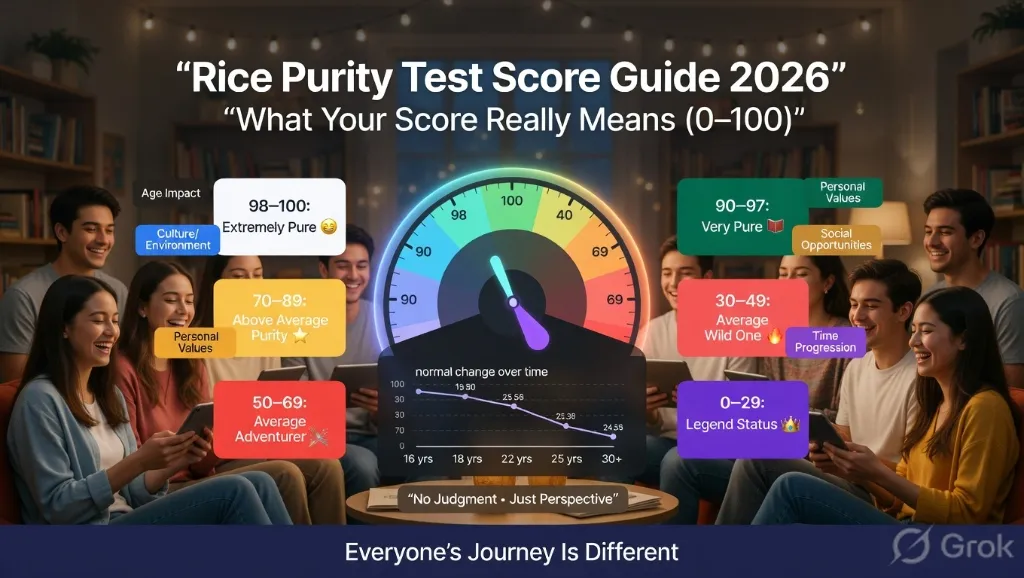
Rice Purity Test Score Guide 2026: What Your Score Really Means
Take the Rice Purity Test Now
100 questions · Free & anonymous · Get your purity score instantly and compare with friends.
Start the Test →Rice Purity Test Score Guide 2026: What Your Score Really Means
Understanding your Rice Purity Test score can be confusing. Is 75 good? Is 30 bad? In this comprehensive guide, we'll break down exactly what every score range means and help you understand where you stand.
What is the Rice Purity Test?
The Rice Purity Test is a 100-question self-assessment that measures your life experiences. Originally created by Rice University students, it's become a viral phenomenon among college students and young adults worldwide.
How it works:
- Start with a score of 100 (completely "pure")
- Answer yes to questions about experiences you've had
- Each "yes" reduces your score by 1 point
- Final score ranges from 0-100
Complete Score Breakdown
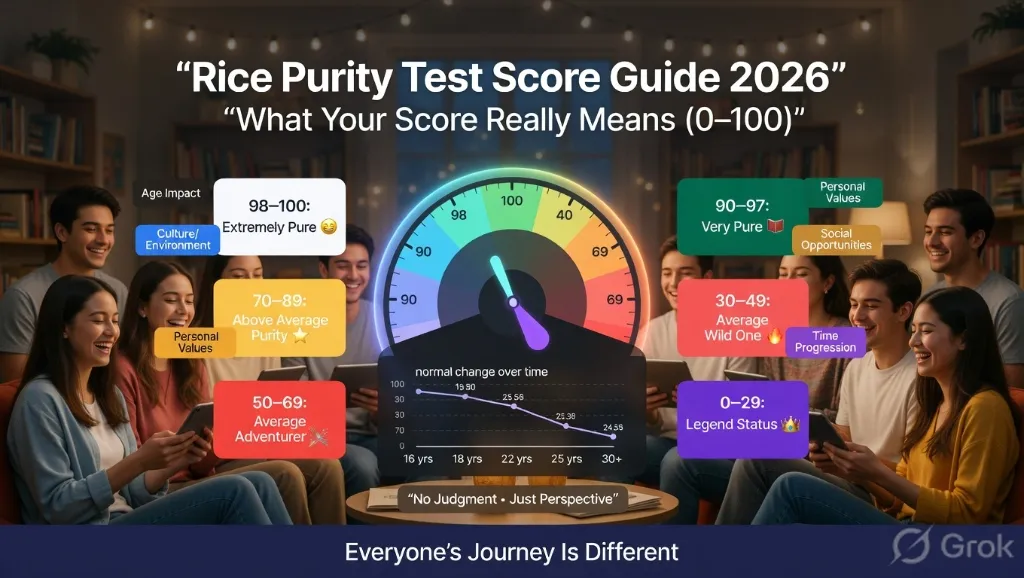
100-98: Extremely Pure 😇
What it means:
You're incredibly innocent and haven't experienced much yet. This is completely normal, especially for younger people or those focused on academics.
Typical characteristics:
- Haven't been in romantic relationships
- Focus on studies or personal goals
- Limited party experience
- Strong personal values
Is this good?
There's no "good" or "bad" score! This just means you're taking life at your own pace.
97-90: Very Pure 📚
What it means:
You've had some basic experiences but remain relatively innocent. You're probably a responsible student who occasionally socializes.
Common experiences:
- Been on a few dates
- Attended some social events
- Tried a few new things
- Still quite cautious
Average for: High school students, college freshmen
89-70: Above Average Purity 🌟
What it means:
You're in the average range! You've had a normal college experience with a healthy balance of studying and socializing.
Typical experiences:
- Balanced social life
- Some romantic experiences
- Tried various activities
- Open to new experiences
Average for: College students (sophomore-junior year)
69-50: Average Adventurer 🎉
What it means:
You're definitely living life! You've had plenty of experiences and aren't afraid to try new things.
Characteristics:
- Active social life
- Multiple relationships
- Party experience
- Adventurous spirit
Average for: College seniors, young adults
49-30: Wild One 🔥
What it means:
You've done a LOT! You're making the most of your college years or life in general.
Indicators:
- Very active social life
- Extensive experiences
- Risk-taker personality
- Living in the moment
Average for: Graduate students, young professionals
29-0: Legend Status 👑
What it means:
You've experienced almost everything on the list. You're either very adventurous or you've been around for a while!
This suggests:
- Extensive life experience
- Very open-minded
- Fearless attitude
- Lots of stories to tell
Note: Very rare! Most people don't score this low.
Average Scores by Demographics
By Age
- 14-17 years: 85-95
- 18-20 years: 70-85
- 21-24 years: 55-75
- 25+ years: 40-65
By Gender
- Male average: 60-65
- Female average: 65-70
- Non-binary average: 60-70
By Location
- Urban areas: 55-70
- Suburban areas: 65-75
- Rural areas: 70-80
What Affects Your Score?
1. Age
Naturally, older people have lower scores due to more life experiences.
2. Environment
College students typically have lower scores than those who didn't attend college.
3. Culture
Different cultural backgrounds significantly impact scores.
4. Personal Values
Your beliefs and comfort levels affect what experiences you pursue.
5. Opportunities
Access to social events and activities plays a role.
Should You Try to Change Your Score?
The short answer: No!
Your Rice Purity Test score is just a snapshot of your experiences. It doesn't define your worth, character, or future.
Remember:
- ✅ Everyone's journey is different
- ✅ There's no "right" score
- ✅ Your score will naturally change over time
- ✅ What matters is being comfortable with your choices
How Scores Change Over Time
Most people's scores decrease as they age and have more experiences. Here's a typical progression:
High School (Age 16): 90-95
College Freshman (Age 18): 80-85
College Senior (Age 22): 60-70
Young Professional (Age 25): 50-60
Adult (Age 30+): 40-55
Comparing Scores with Friends
Comparing scores can be fun, but remember:
Do:
- ✅ Keep it lighthearted
- ✅ Respect privacy
- ✅ Avoid judgment
- ✅ Celebrate differences
Don't:
- ❌ Pressure others to share
- ❌ Judge people's scores
- ❌ Brag or shame
- ❌ Make assumptions
Take the Test Again
Your score changes as you have new experiences! Our test uses random questions from a 300-question bank, so you can retake it anytime.
Frequently Asked Questions
Q: Is a lower score better?
A: There's no "better" score! It's just a reflection of your experiences.
Q: Can I improve my score?
A: Scores typically decrease over time. Focus on making choices you're comfortable with, not changing your score.
Q: Is my score normal?
A: If you're within 20 points of the average for your age group, you're very typical!
Q: Should I be honest?
A: The test is anonymous and just for fun. Be as honest as you're comfortable with.
Conclusion
Your Rice Purity Test score is a fun way to reflect on your experiences, but it's not a measure of your worth. Whether you scored a 95 or a 15, you're on your own unique journey.
Remember: Life isn't about checking boxes on a test—it's about making choices that align with your values and make you happy. If you are curious about how this test even started, check out our Complete History of the Rice Purity Test!
Want to see how you compare? Take the test now and share your results with friends!
Have questions about your score? Leave a comment below!
Follow Us on Social Media
Stay connected with the Rice Purity Test community:
Ready to find your score?
Take the Rice Purity Test →Comments (0)
Related Posts
What is the Rice Purity Test? Complete Guide 2026
Everything you need to know about the Rice Purity Test - what it is, how it works, and what your score really means.
Average Rice Purity Score by Age (2026 Data & Breakdown)
What is the average Rice Purity Test score by age? See typical scores for high schoolers, college students, and adults, and understand what they really mean.
What Is a Good Rice Purity Score? (And Is High or Low Better?)
Is a high or low Rice Purity score good? Here's what counts as a good score, what each range says about you, and why there's really no wrong answer.