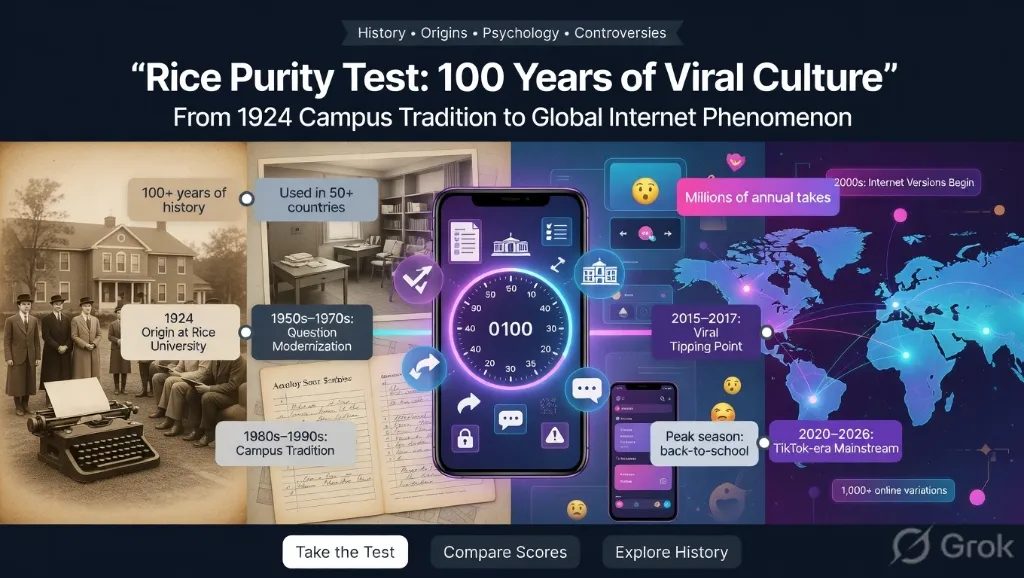
Rice Purity Test: Complete History, Origins & Why It Went Viral
Take the Rice Purity Test Now
100 questions · Free & anonymous · Get your purity score instantly and compare with friends.
Start the Test →Rice Purity Test: The Complete History & Why It Went Viral
Ever wondered where the Rice Purity Test came from? This seemingly simple 100-question survey has a fascinating 100-year history that spans from a college orientation tradition to a viral internet phenomenon. Let's dive into the complete story.
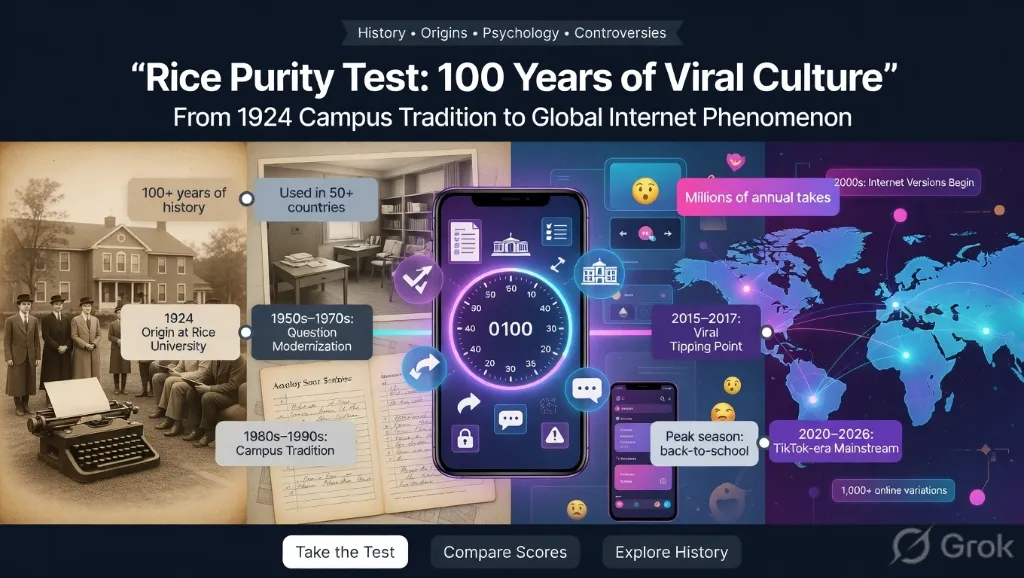
The Origins: Rice University, 1924
The Beginning
The Rice Purity Test was created in 1924 at Rice University in Houston, Texas. But it wasn't always the test we know today.
Original purpose:
- Orientation tool for new students
- Ice-breaker activity
- Way to gauge student experiences
- Bonding exercise for freshmen
Why "Purity"?
The term "purity" reflected the conservative values of the 1920s. The test was designed to measure how "innocent" or "worldly" incoming students were.
Fun fact: The original test had very different questions focused on 1920s college life!
Evolution Through the Decades
1920s-1940s: The Early Years
Characteristics:
- Administered during orientation week
- Focused on basic college experiences
- Very tame by today's standards
- Handwritten and passed around
Sample original questions:
- "Have you ever stayed up past midnight?"
- "Have you ever skipped chapel?"
- "Have you ever danced?"
1950s-1970s: The Modernization
As society changed, so did the test:
Updates included:
- More personal questions
- Dating and relationship topics
- Expanded to 100 questions
- Typed and photocopied
Cultural context:
The sexual revolution and changing social norms influenced question content.
1980s-1990s: Campus Tradition
The test became a beloved Rice University tradition:
How it spread:
- Passed between student generations
- Shared at parties and gatherings
- Became part of Rice culture
- Other universities created versions
2000s: The Internet Age
The digital revolution:
- First online versions appeared
- Spread beyond Rice University
- Reached other colleges nationwide
- Questions updated for modern life
The Viral Explosion: 2010s-Present
How It Went Viral
2015-2017: The Tipping Point
The Rice Purity Test exploded on social media:
Platforms:
- Twitter: Students sharing scores
- Instagram: Score comparison posts
- Reddit: Dedicated communities
- TikTok: Reaction videos
Why it went viral:
- Shareability: Easy to post your score
- Comparison: Natural competitiveness
- Anonymity: Safe way to share experiences
- Universality: Everyone can relate
- Nostalgia: Connects generations
The TikTok Era (2020-Present)
Massive growth:
- Billions of views on #RicePurityTest
- Reaction videos trending
- Couples taking it together
- Friend group challenges
Popular TikTok trends:
- "Taking the Rice Purity Test with my..."
- Score reveal reactions
- Before/after comparisons
- Explaining low/high scores
Modern Versions & Variations
Official vs. Unofficial
Original Rice University version:
- Still used at Rice orientation
- Maintained by students
- Classic 100 questions
Internet versions:
- Hundreds of variations
- Updated questions
- Mobile-friendly
- Additional features
Popular Variations
Specialized versions:
- College edition
- High school edition
- Adult version
- Relationship version
- LGBTQ+ inclusive version
Our version:
- 300-question bank
- Random selection
- Modern questions
- Mobile-optimized
- Social sharing
Why It Remains Popular
Psychological Appeal
1. Self-Reflection
People enjoy thinking about their experiences and life journey.
2. Social Comparison
Natural curiosity about how we compare to others.
3. Conversation Starter
Perfect icebreaker for new friendships.
4. Nostalgia
Looking back on past experiences.
5. Validation
Feeling normal about your experiences.
Cultural Significance
What it represents:
- Coming-of-age experiences
- College culture
- Generational differences
- Social norms evolution
Controversies & Criticisms
Valid Concerns
1. Privacy Issues
Some questions are very personal.
2. Peer Pressure
Can make people feel pressured to have certain experiences.
3. Outdated Concepts
"Purity" implies judgment.
4. Not Inclusive
Original version wasn't LGBTQ+ friendly.
Modern Solutions
How we've addressed these:
- ✅ Anonymous testing
- ✅ No judgment messaging
- ✅ Updated, inclusive questions
- ✅ Optional sharing
- ✅ Educational context
Impact on College Culture
Positive Effects
Community building:
- Bonding experience
- Conversation starter
- Shared tradition
- Cross-generational connection
Self-awareness:
- Reflection on choices
- Understanding experiences
- Personal growth
Negative Effects
Potential issues:
- Competition over scores
- Pressure to have experiences
- Judgment based on results
- Privacy concerns
The Test Today
Current Statistics
Usage:
- Millions of tests taken annually
- Popular in 50+ countries
- Peak usage: September (back to school)
- Average age: 18-24
Demographics:
- 60% college students
- 25% high school students
- 15% adults
Modern Features
What's new:
- Mobile apps
- Social media integration
- Score tracking over time
- Group comparisons
- Anonymous sharing
The Future of the Rice Purity Test
Predictions
What's next:
- More personalized versions
- AI-powered insights
- Virtual reality experiences
- Gamification elements
- Mental health integration
Staying Relevant
How it evolves:
- Updated questions for new generations
- Inclusive language
- Modern technology
- Respect for privacy
- Educational value
Take the Modern Version
Want to experience this 100-year tradition? Our version combines the classic concept with modern updates:
Features:
- ✅ 300 questions (randomly selected)
- ✅ Mobile-friendly
- ✅ Completely anonymous
- ✅ Social sharing options
- ✅ No judgment, just fun
Interesting Facts
Did you know?
- Original name: "The Rice Purity Test" wasn't always the official name
- Paper version: Students used to pass around photocopies
- Score inflation: Average scores have decreased over decades
- Global reach: Translated into 20+ languages
- Celebrity scores: Many celebrities have shared their scores online
- Academic study: Researchers have studied the test's psychology
- Trademark: Rice University doesn't trademark the test
- Variations: Over 1,000 different versions exist online
Conclusion
From a simple 1924 orientation activity to a viral internet phenomenon, the Rice Purity Test has stood the test of time. Its enduring popularity speaks to our universal desire to understand ourselves and connect with others through shared experiences.
Whether you score a 95 or a 15, remember: the test is just for fun. Your experiences—or lack thereof—don't define your worth. They're simply part of your unique journey. If you still have questions, don't miss our Ultimate Guide to the Rice Purity Test.
Ready to become part of this 100-year tradition?
Take the Test | Compare Scores | Play More Games
What's your Rice Purity Test story? Share in the comments!
Connect With The Purity Community
Share your stories and connect globally:
Ready to find your score?
Take the Rice Purity Test →Comments (0)
Related Posts
The Original Rice Purity Test: Full History From 1924 to 2026
Discover the real history behind the Rice Purity Test — from its origins at Rice University in 1924 to becoming a viral TikTok trend in 2026. The full story.
Why Is It Called the Rice Purity Test? (Name & Origin Explained)
Ever wondered why it's called the 'Rice' Purity Test? Here's the story behind the name, where it came from, and why it has nothing to do with the food.
Average Rice Purity Score by Age (2026 Data & Breakdown)
What is the average Rice Purity Test score by age? See typical scores for high schoolers, college students, and adults, and understand what they really mean.